Rooted in traditional planning principles yet expressed with a modern architectural language, the project creates a calm and timeless living environment deeply connected to nature.
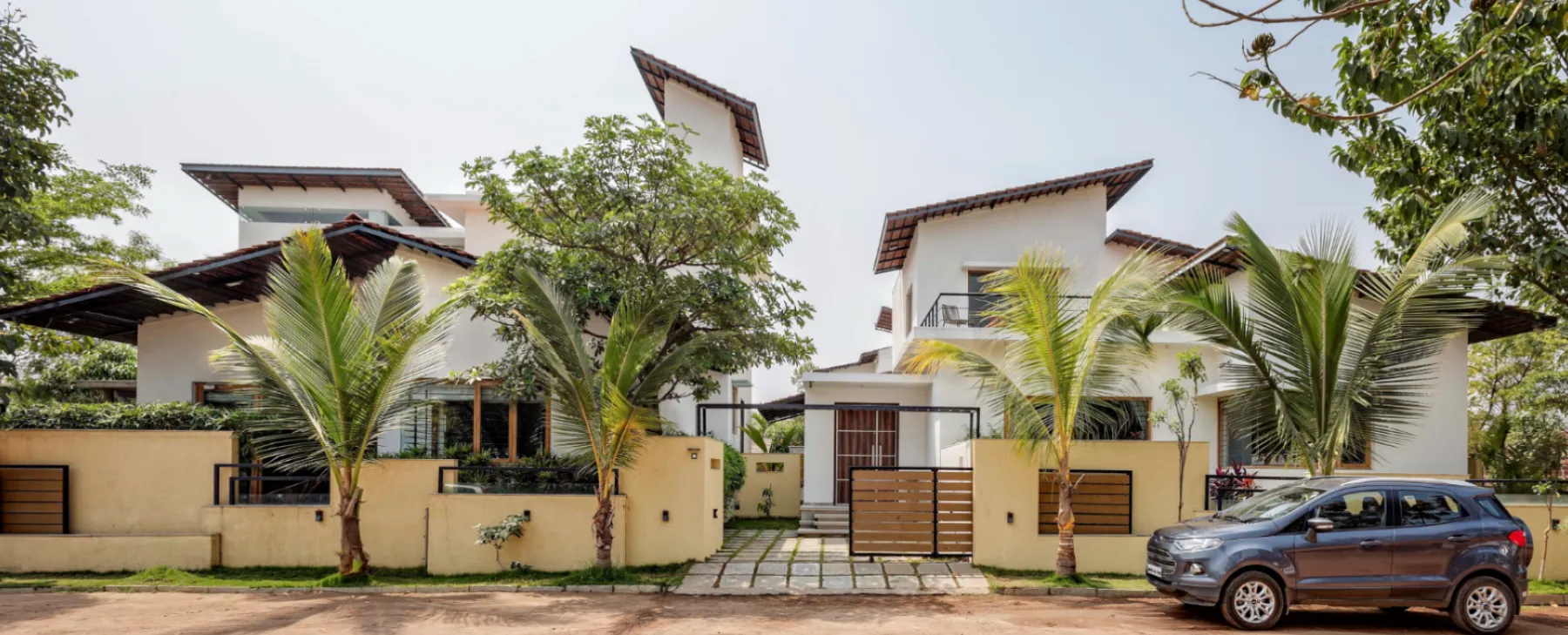
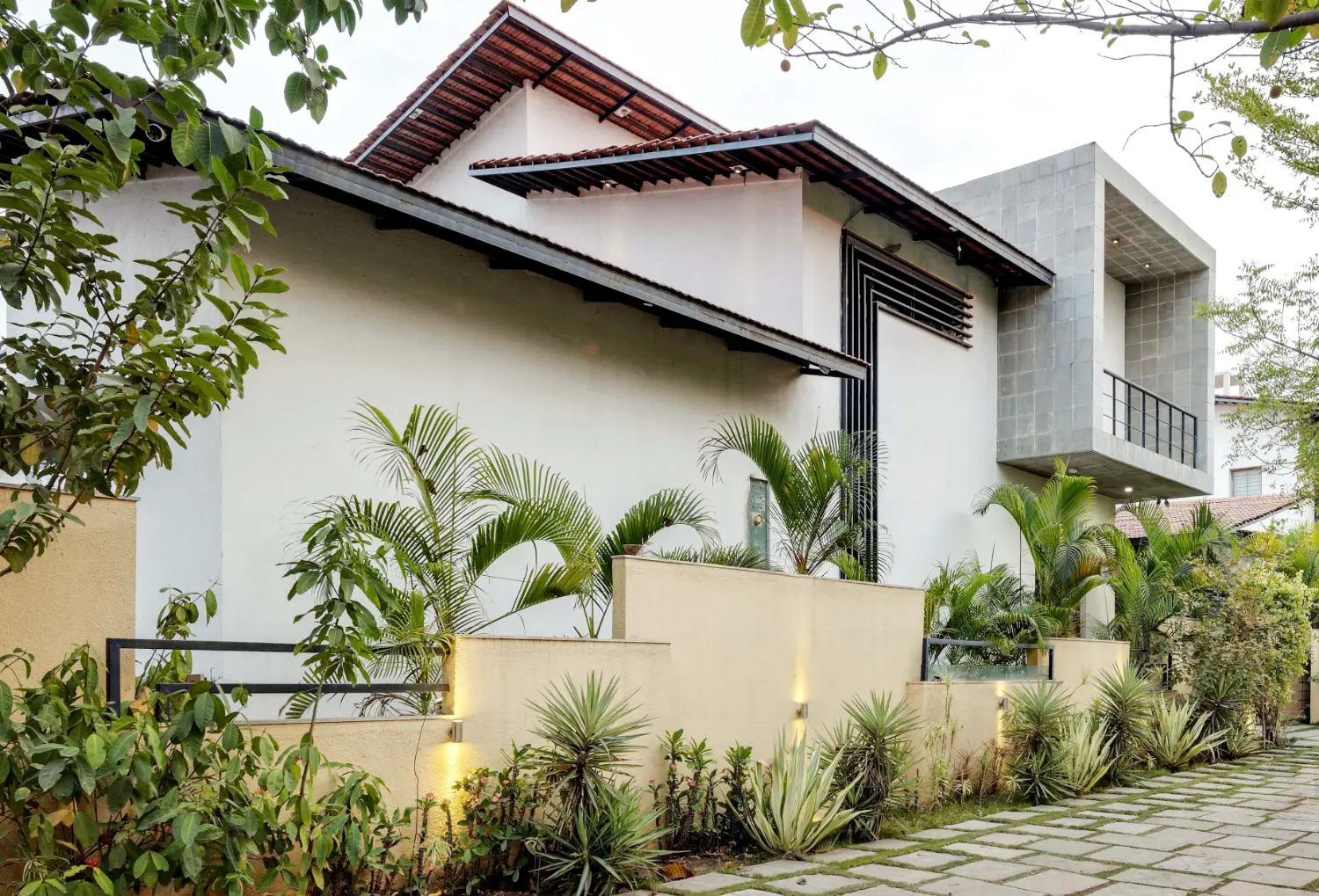
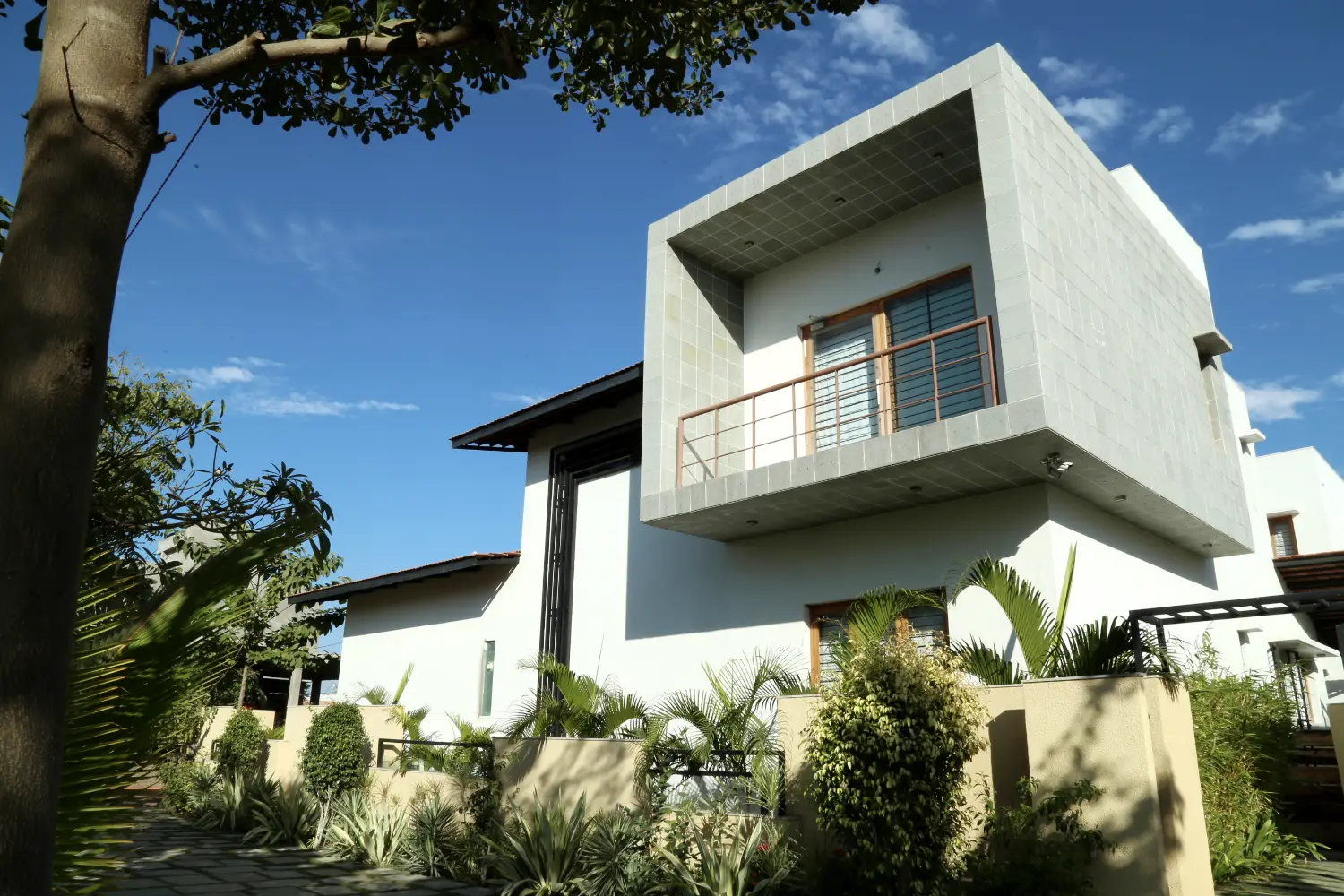
Defined by floating horizontal slabs, sloping roofs, and a restrained palette of natural materials such as Shahabad stone, Kadappa stone, wood, and granite, the residence balances privacy and interaction through interconnected indoor-outdoor spaces.
Kasliwal Residence captures the essence of indigenous architecture through a bold contemporary expression rooted in context, sustainability, and nature. Designed as an architect’s own residence for a joint family of three brothers, the project was envisioned as a peaceful retreat that redefines modern living through simplicity, natural materials, and meaningful spatial experiences.
Located on the quieter outskirts of the city, away from the density and pace of the old urban fabric, the site was carefully selected to create a calm and rejuvenating environment immersed in nature. The design aspires to offer a sustainable lifestyle that reconnects everyday living with light, landscape, and open spaces.
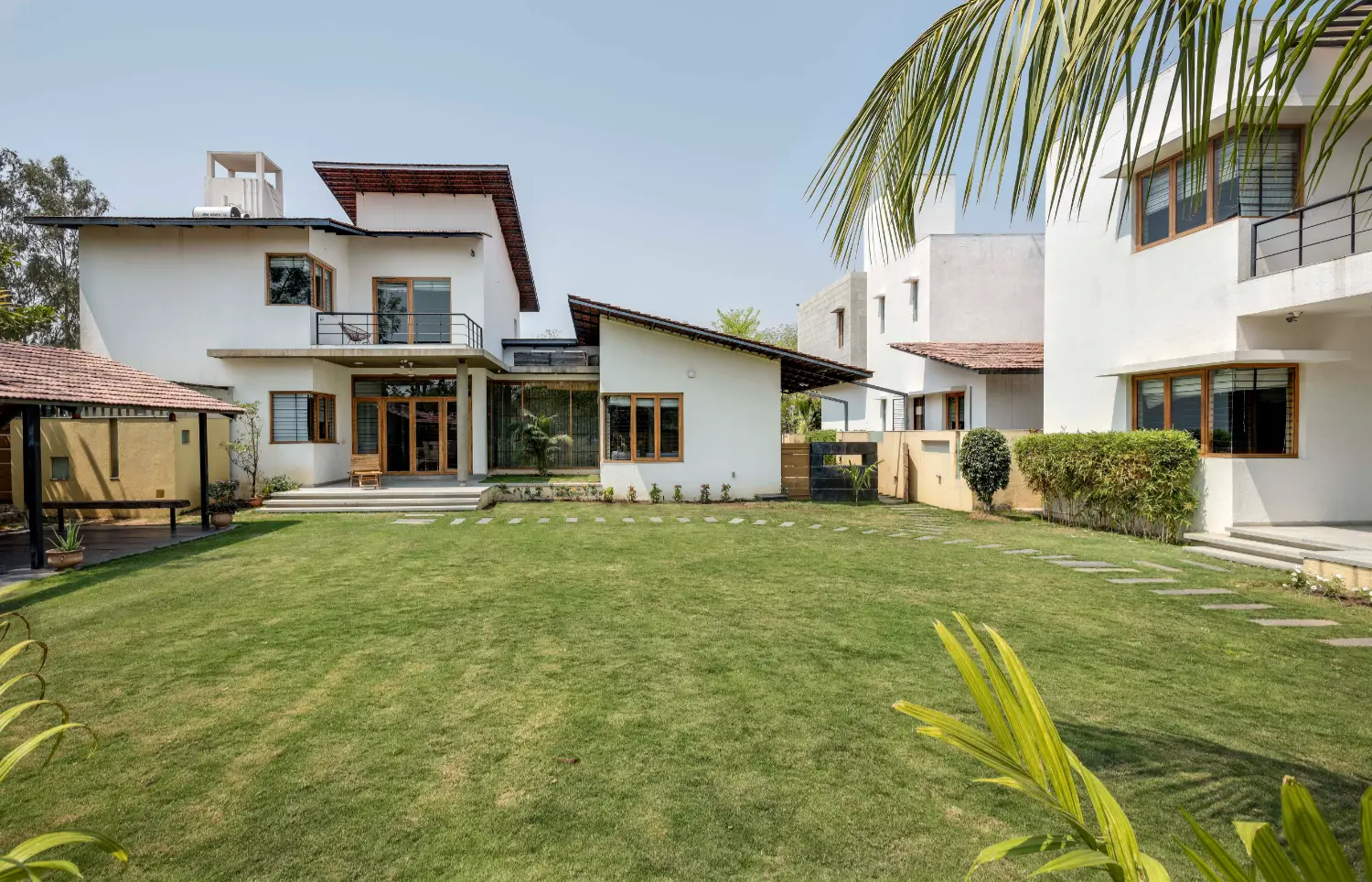
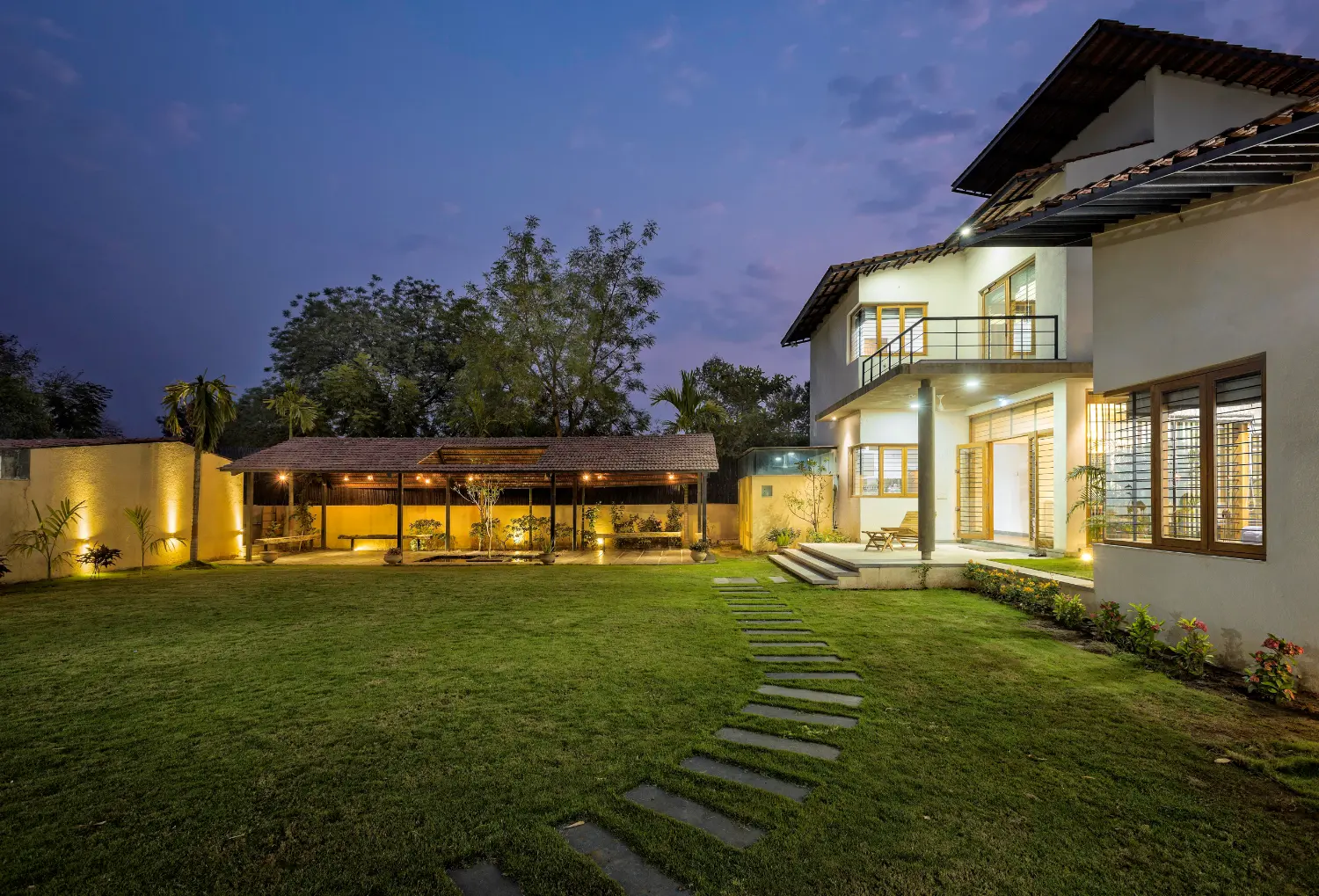
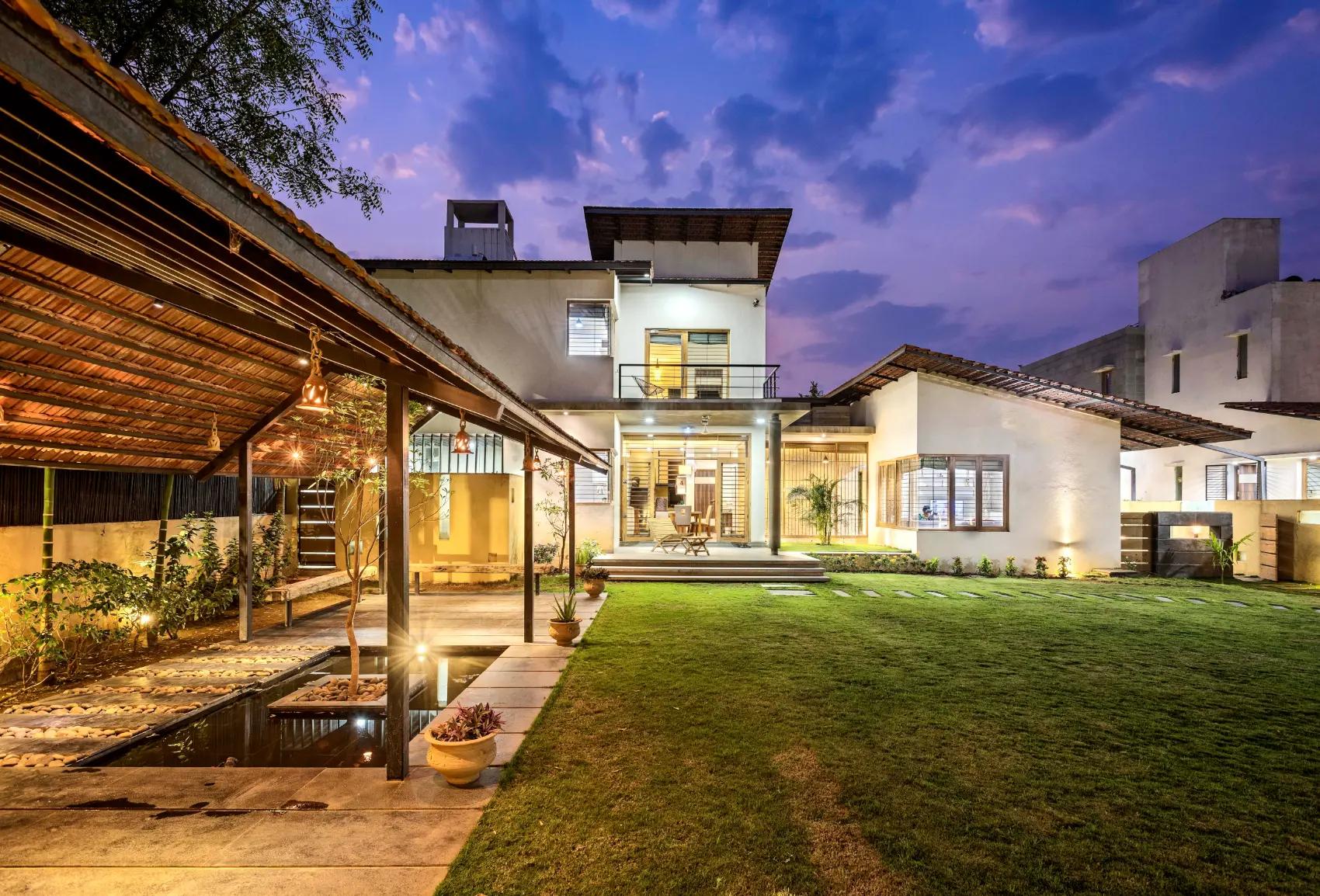
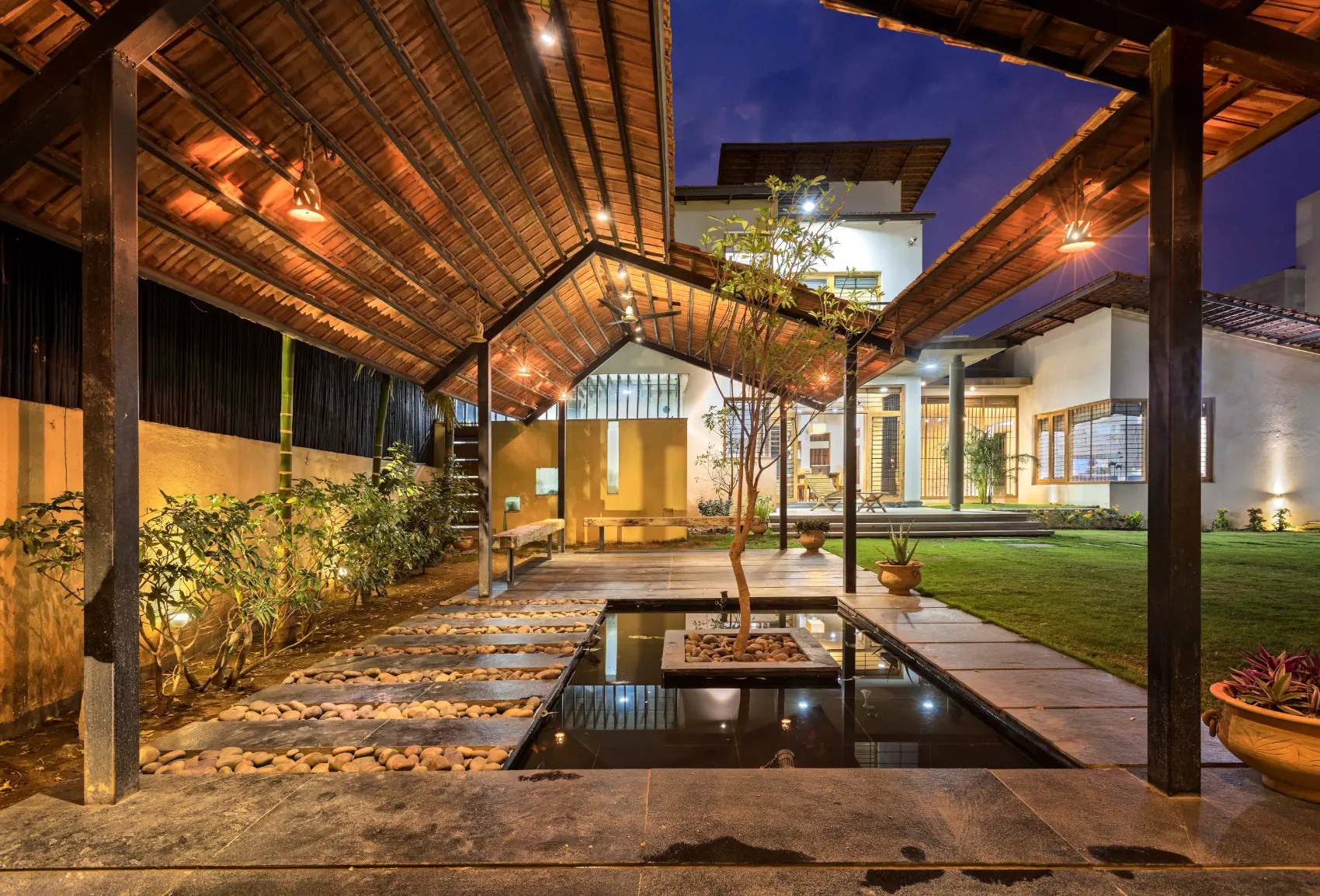
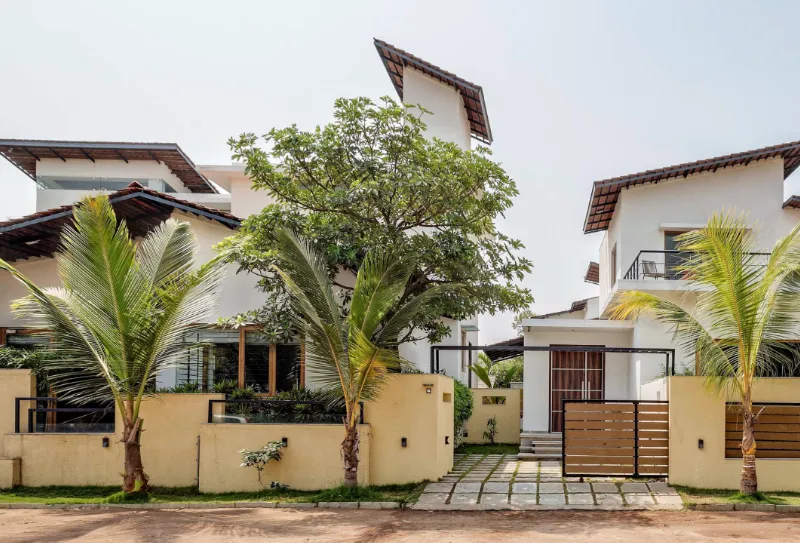
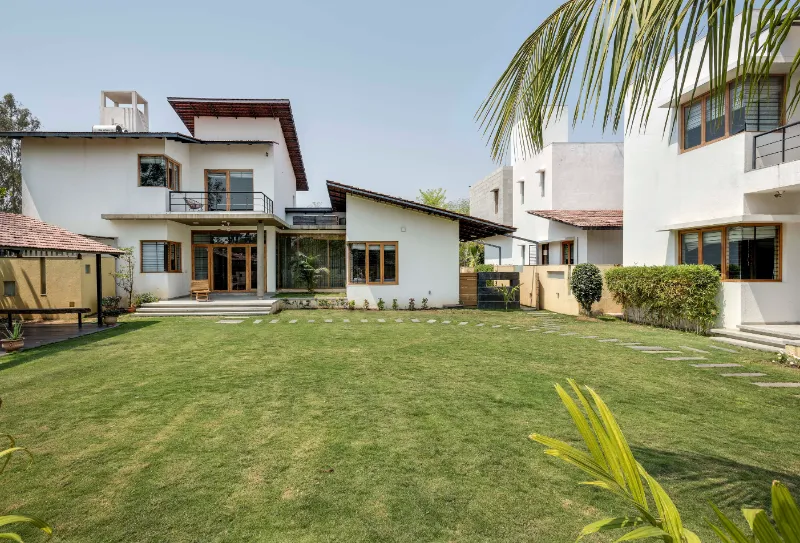
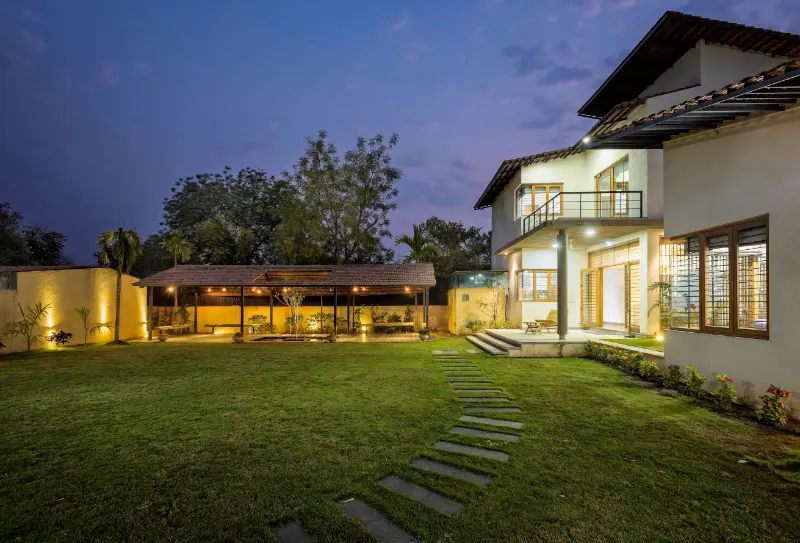
The bungalow complex is conceived as an assemblage of three independent residences interconnected through landscaped courts, verandas, water bodies, gardens, and a pavilion. The spatial composition creates a sequence of layered experiences, where every transition reveals a new view, framed landscape, or interaction space overlooking the surrounding farmland.
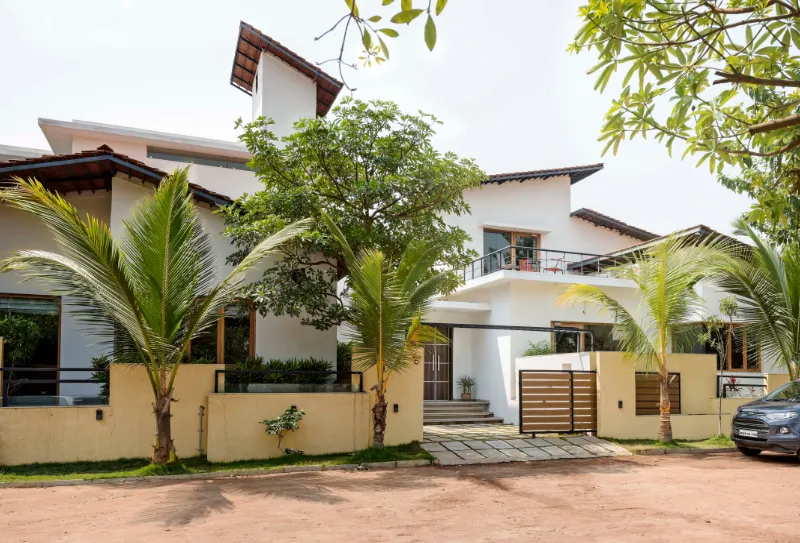
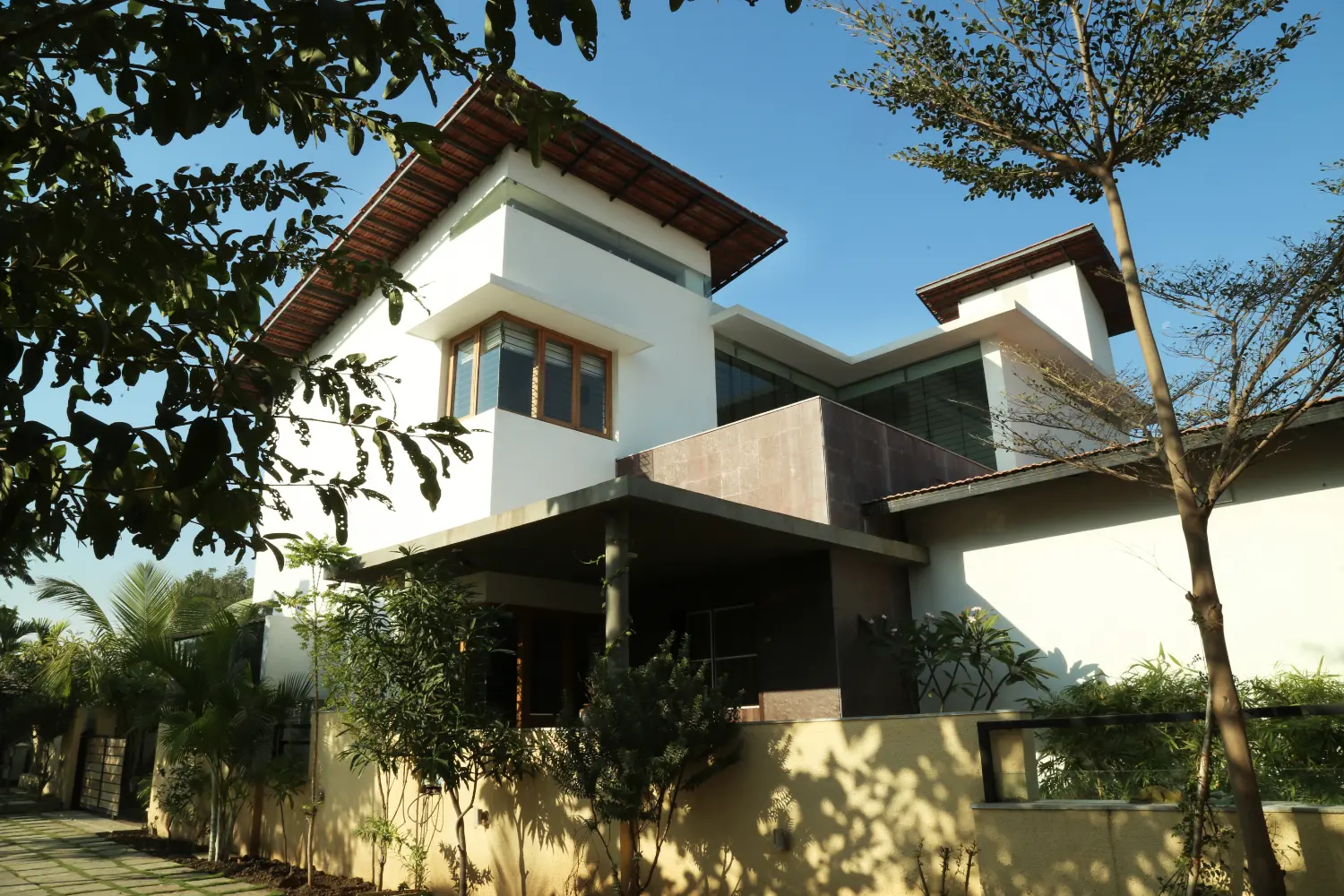
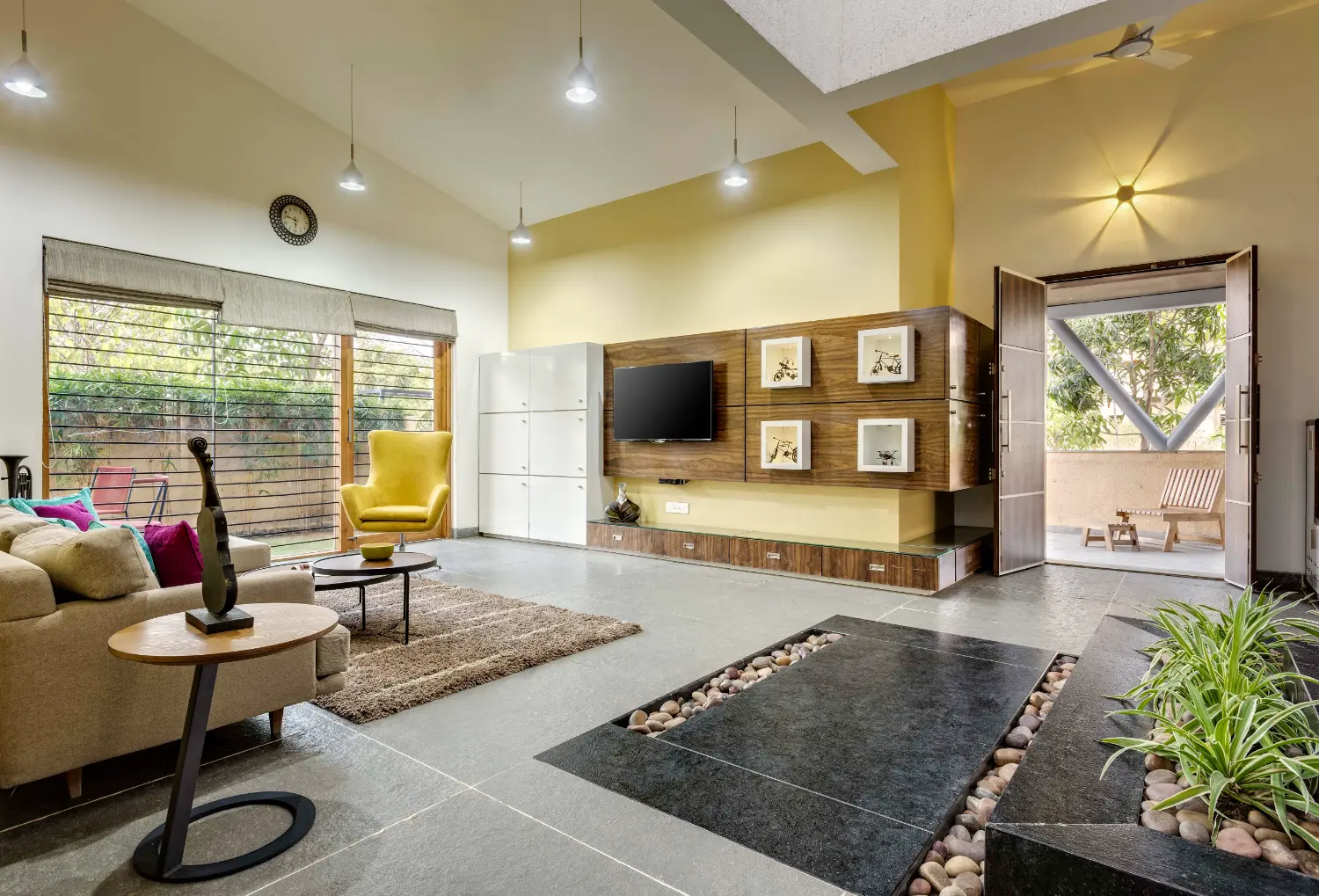
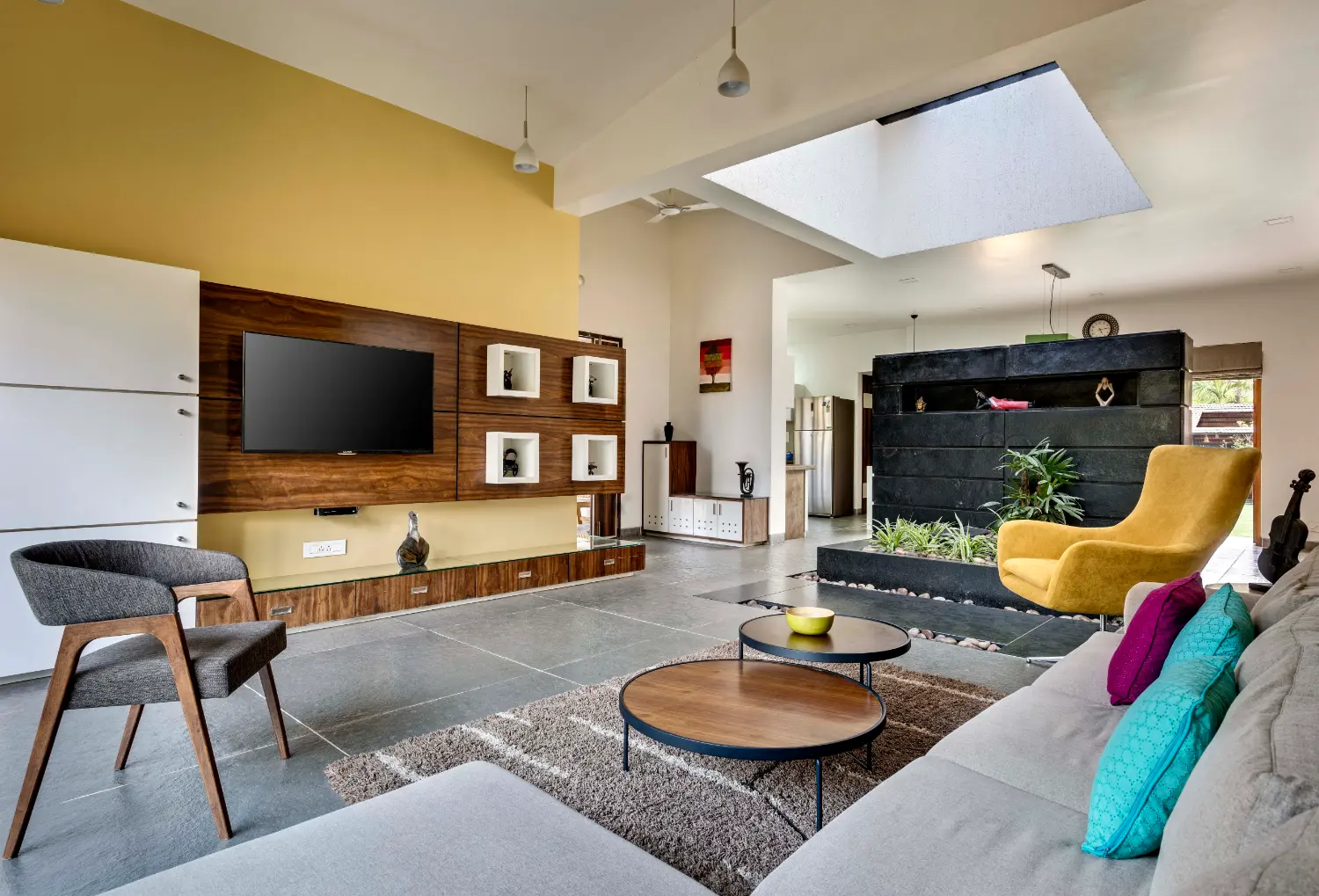
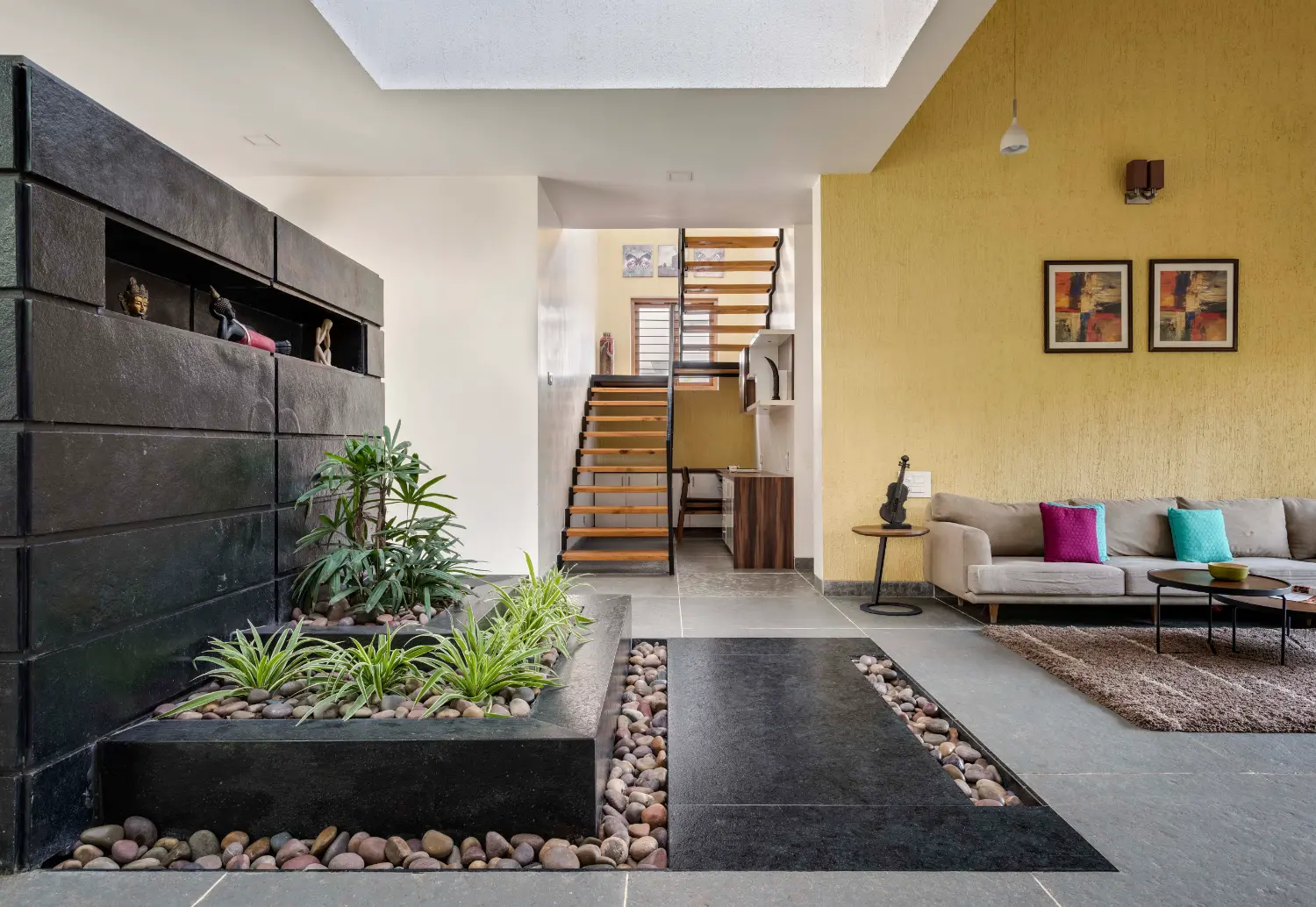
Architecturally, the house is expressed as a linear composition of horizontally floating slabs and sloping cantilevered roofs. Large expanses of glass visually extend the interiors into the landscape, while the surrounding trees create a continuous natural canopy around the built form. The planning revolves around an open-to-sky courtyard anchored by an ornamental tree, establishing a seamless relationship between indoor spaces, natural light, ventilation, and the garden beyond.
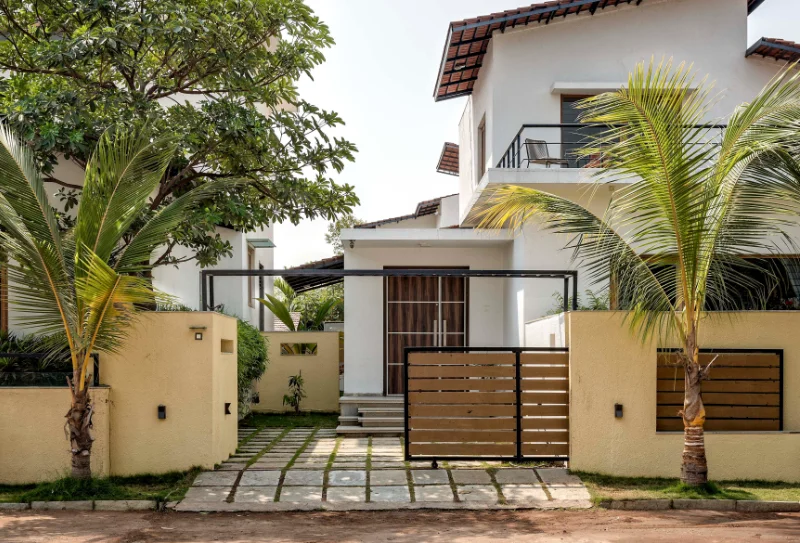
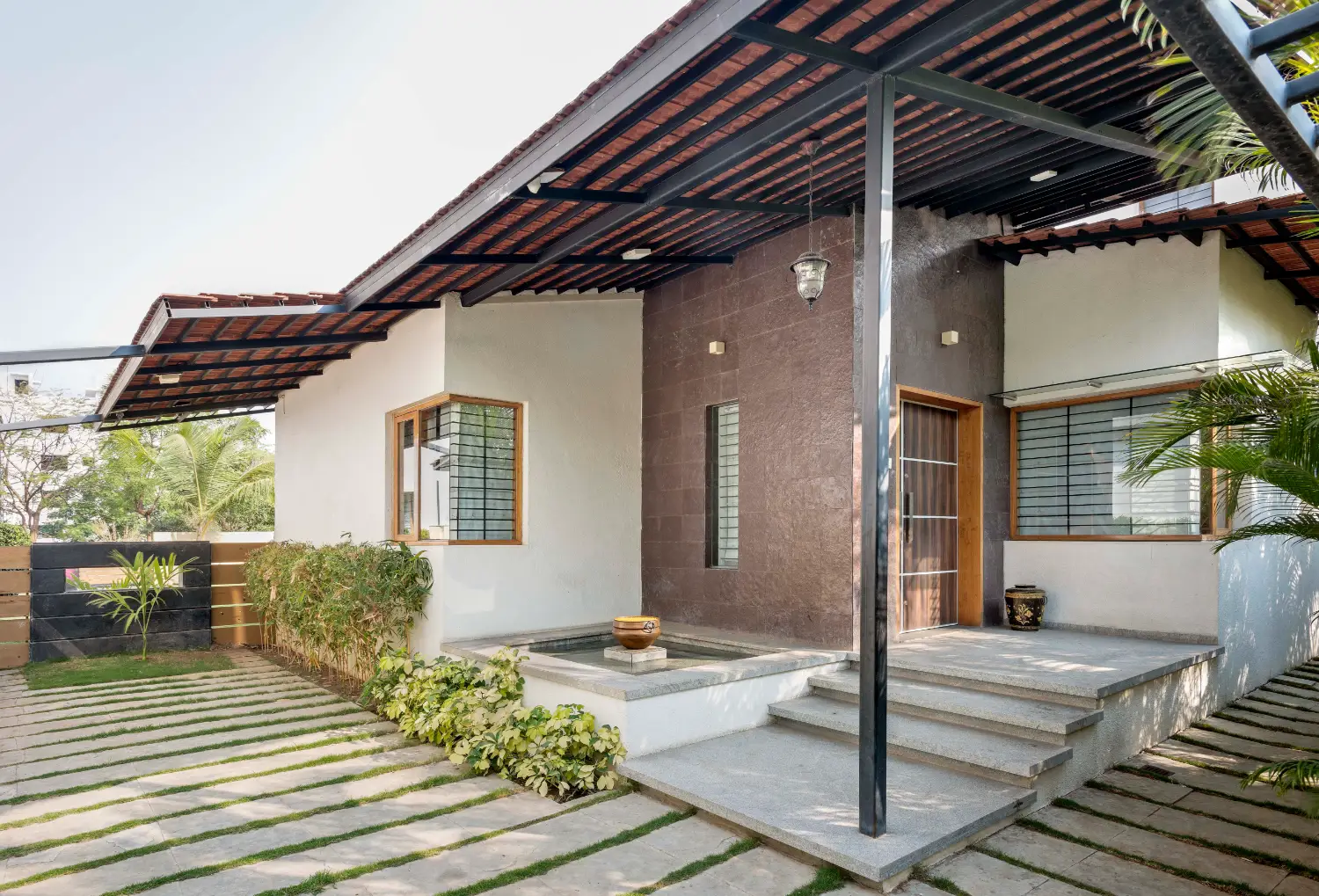
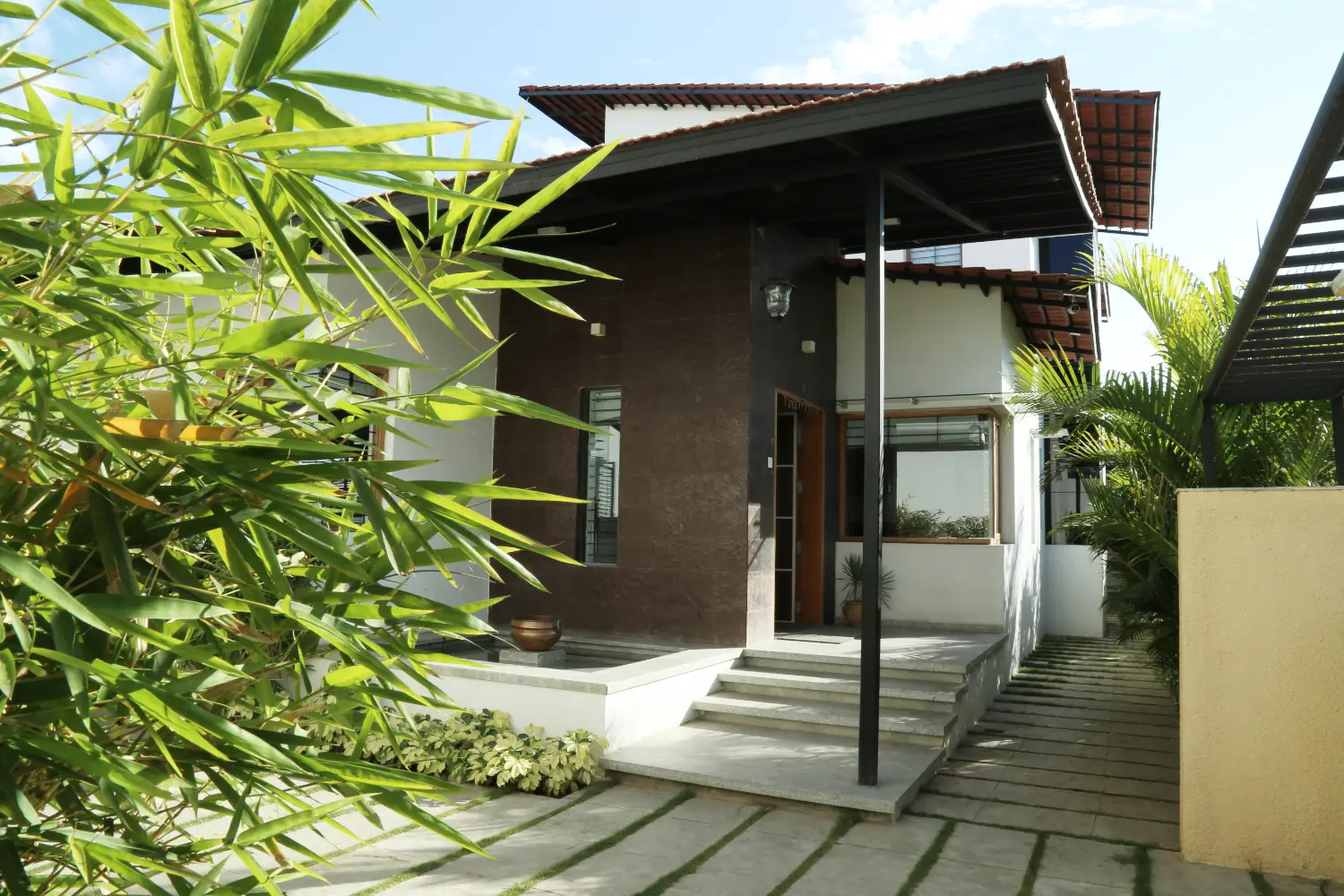
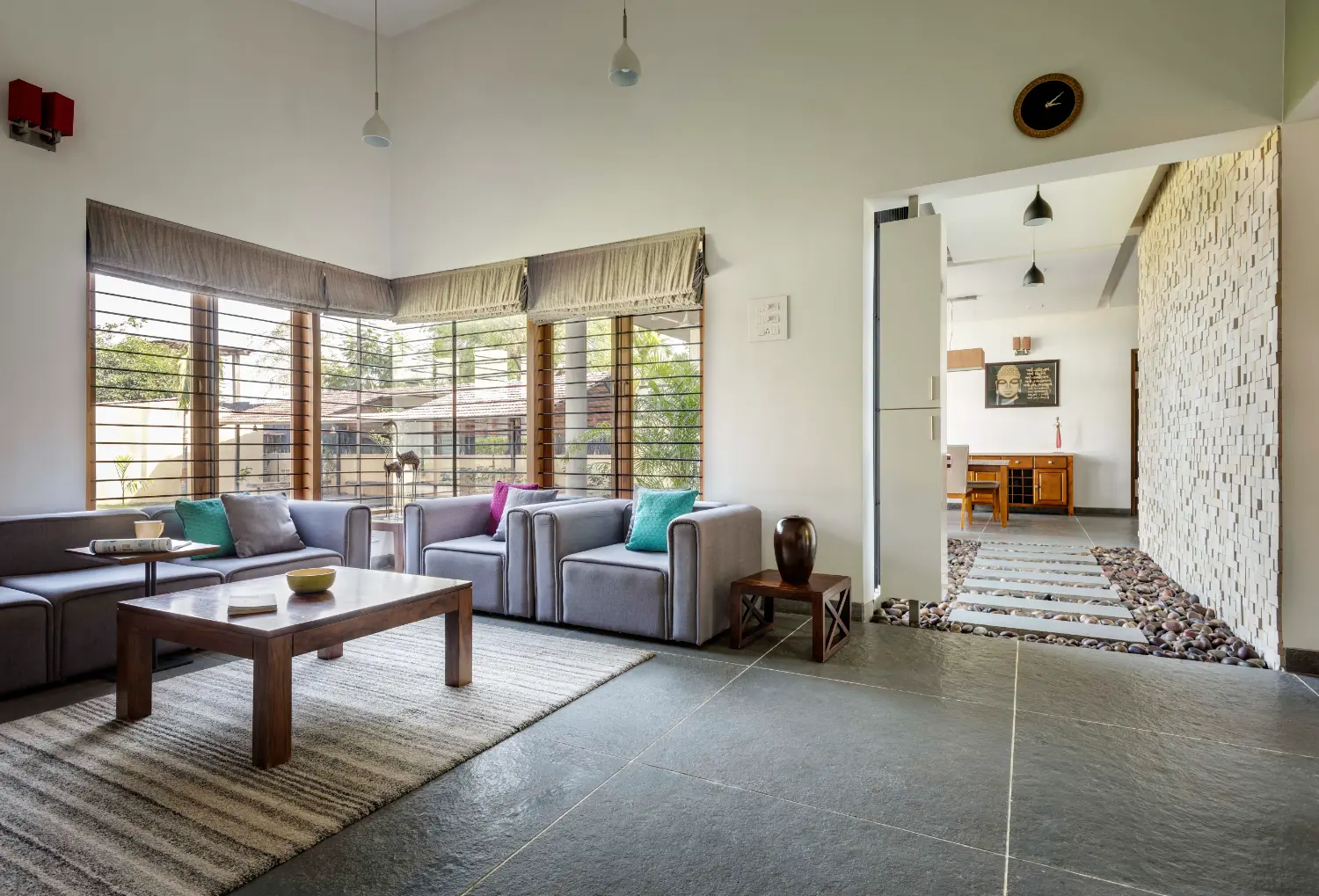
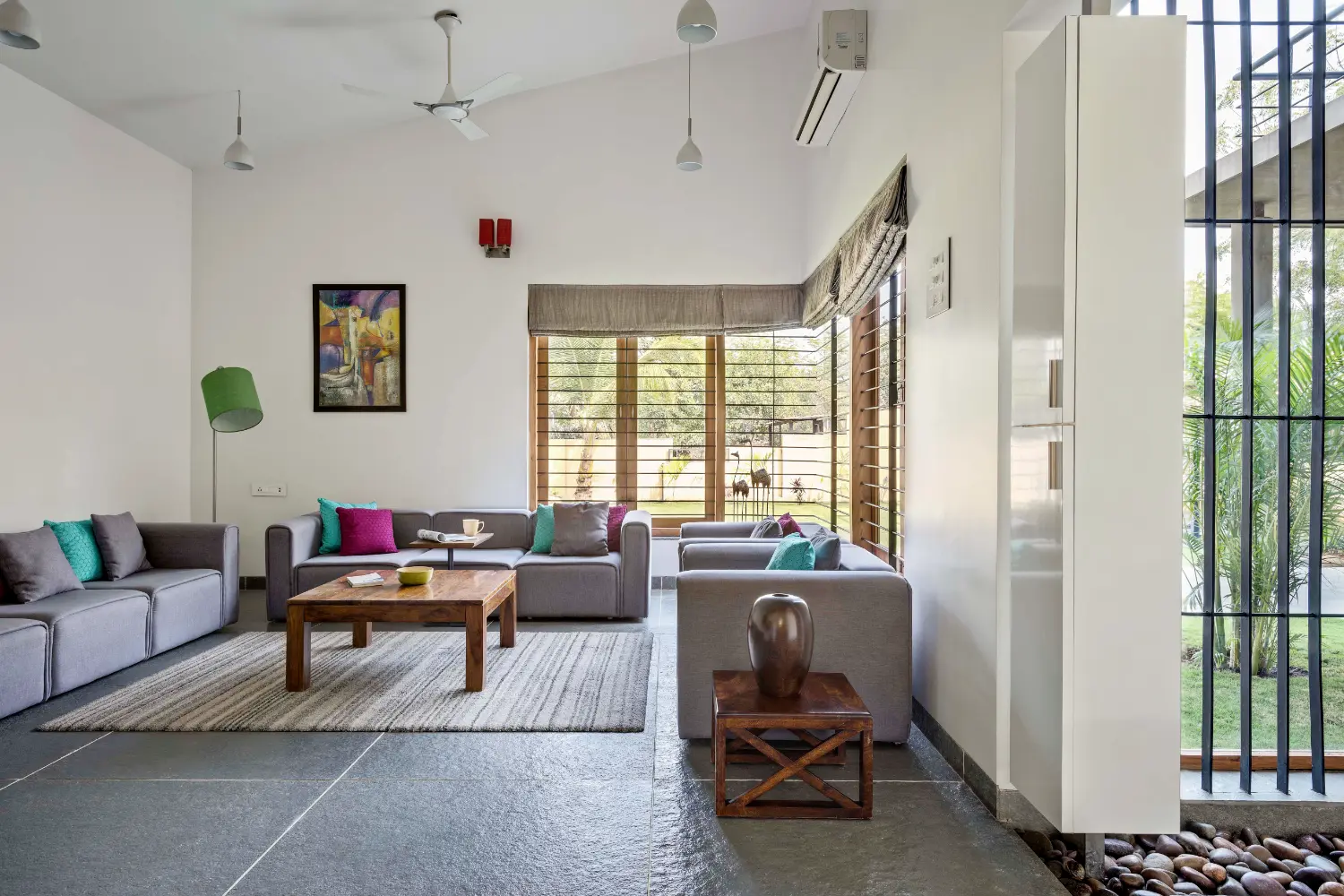
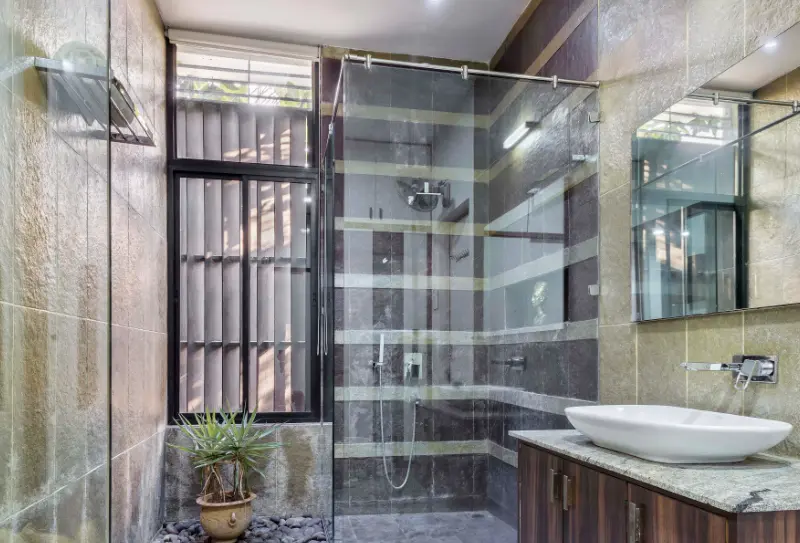
The material palette remains restrained yet tactile, comprising dressed Sadharhali stone, leather-finished Shahabad stone, granite, Kadappa stone, and wood. These natural materials are articulated through contrasting textures and refined detailing, lending warmth and timelessness to the spaces. Traditional architectural elements such as courtyards, verandas, and sloping roofs are reinterpreted with a contemporary design sensibility, creating a strong sense of regional context.
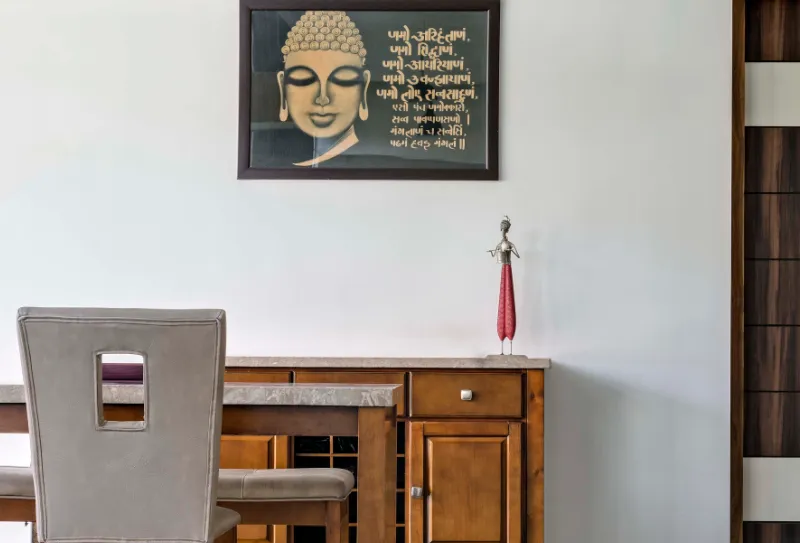
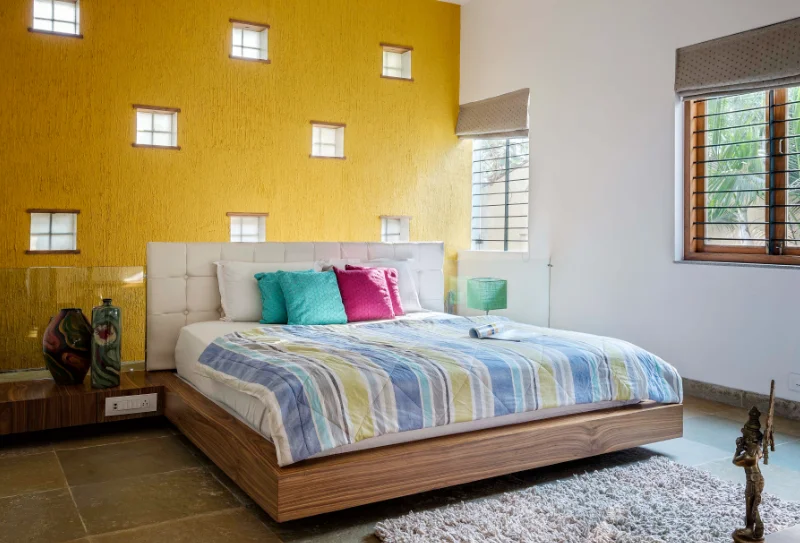
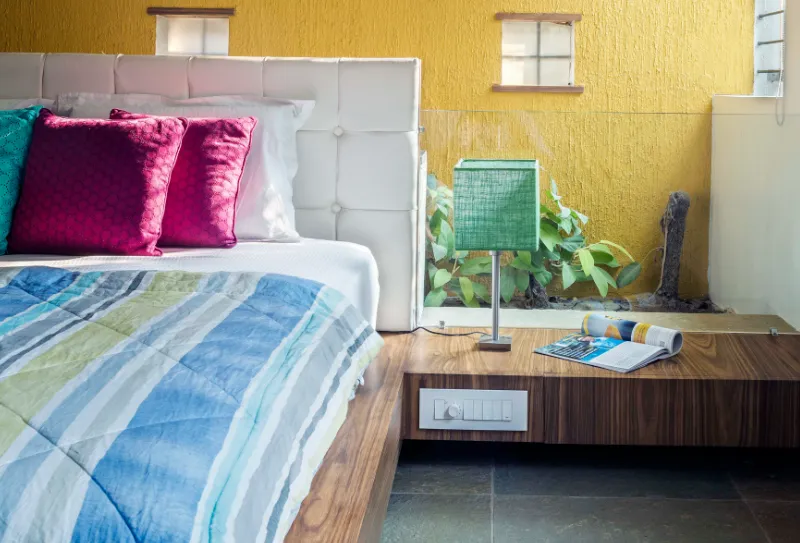
Each residence functions independently with a separate entrance, while carefully designed interaction spaces between the houses strengthen the collective family environment. Common living and dining spaces open into courtyards, verandas, and landscaped gardens, encouraging visual continuity and social interaction. Landscape elements are seamlessly integrated throughout the house in living spaces, passages, bedrooms, and even toilets to maintain a constant connection with nature.
Special emphasis was placed on innovative architectural detailing. Corner windows maximize views and natural light while enhancing openness within the interiors. Elements such as Shahabad stone flooring, rustic textures, and a fabricated staircase with wooden treads contribute to the warm and earthy character of the home. Upper-floor terraces are strategically positioned to overlook the gardens and surrounding landscape, creating quiet spaces for relaxation and reflection.
The project ultimately becomes more than a residence - it is a contemporary interpretation of traditional living, where architecture, landscape, and family life coexist in harmony. Informal interaction spaces, shaded seating areas, and interconnected courtyards together create a timeless home designed around togetherness, sustainability, and a deep connection to nature.